PFC Woodrow Blake
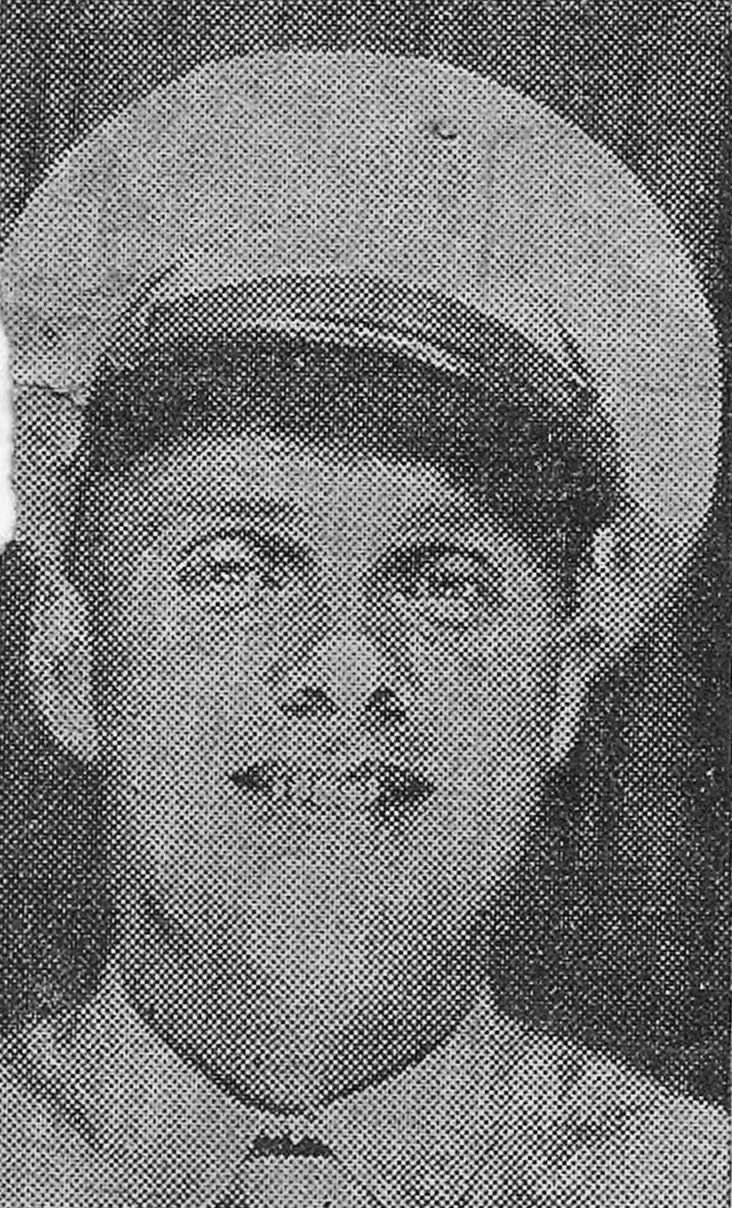
Private First Class (PFC) Woodrow Blake of Headquarters Company, 1st Battalion, 401st Glider Infantry Regiment, and 3rd Battalion, 327th Glider Infantry Regiment, 101st Airborne Division, was born in Cabell County, West Virginia, to Albert G. and Laura Ellen (Smith) Blake on December 23, 1911. Woodrow was their youngest son. He had two brothers, Leonard S.. and Thomas J. Blake, and six sisters, Nellie A., Mary A., Ida M., Florence V., Anna M., and Eva H. Blake. One brother had died in infancy, almost three months after he was born.
Woodrow registered for the draft in Le Sage, Cabell County, West Virginia, at age 29, likely in 1941. He owned a farm at that time. He enlisted in the U.S. Army at Fort Thomas, Newport, Kentucky, on March 25, 1942. He was assigned to Dog Company, 325th Infantry, 82nd Infantry Division, at Camp Claiborne, Louisiana, where he received his initial training.
The 82nd was reorganized in August 1942 into an airborne division, and Dog Company, 325th, became Charlie Company, 401st Glider Infantry Regiment, assigned to the newly formed 101st Airborne Division on August 15. A week later, on August 21, 1942, PVT Woodrow Blake was transferred to the Headquarters & Headquarters Company, 1st Battalion of the 401st GIR.
After completing his stateside training, he travelled overseas to England aboard the SS Samaria, which sailed from New York Harbor on September 5, 1943.
Upon completing more intense training in England, the men of HQ Co, 1st Bn, landed at Utah Beach shortly after noon on D-Day. The next day, on June 7, 1944, the glidermen engaged the Germans for the first time when they were attacked in the assembly area at Brucheville. It marked the beginning of a series of fierce battles with the Germans, mainly around the city of Carentan. PVT Woodrow Blake returned with the 401st in England on July 13, 1944, when his company docked at Southampton.
Although no documents confirm his presence during the deployment of HQ Co, 1st Bn, 401st GIR, during Operation Market Garden, it is likely that PVT Woodrow Blake also fought the Germans in the Netherlands.
His next mission was in Belgium, during the Battle of the Bulge, which started for the 101st Airborne Division after it arrived at Bastogne on December 19, 1944.
On January 4, 1945, the Germans launched a final, determined attack at Champs, Belgium, attempting to overrun their opponents. The men of the 327th fought harder on January 4 than at any other time during World War II. The Germans got as close as one hundred yards to the command post of the 327th 1st Battalion. The losses were heavy, and that afternoon, the 3rd Battalion, 327th GIR (formerly 1st Battalion, 401st GIR), reinforced the depleted 1st Battalion.
During that day’s actions, PFC Woodrow Blake was killed in action by a gunshot wound to the chest.
Another Screaming Eagle had soared to the ultimate height. 🦅
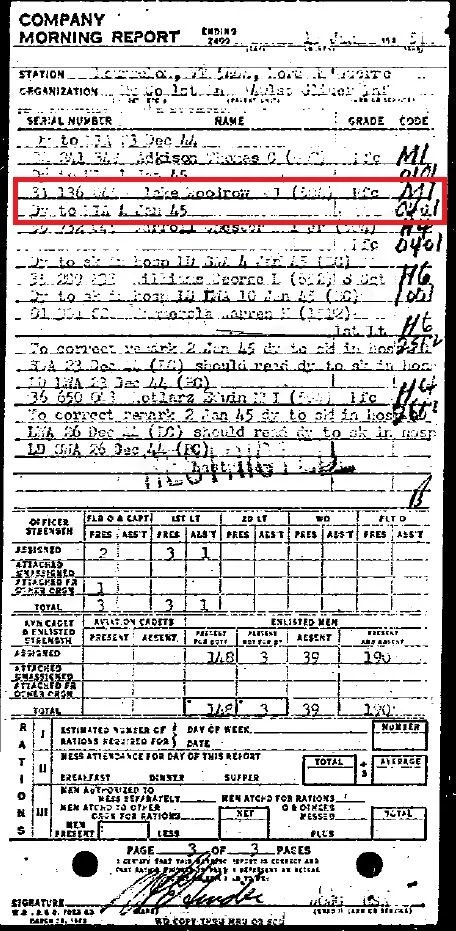
Source: NARA
PVT Woodrow Blake died at the age of 33 during the Battle of the Bulge on January 4, 1945. He was posthumously awarded a Purple Heart Medal.
Woodrow was first buried at the Temporary American Military Cemetery Grand Faily #1 in Plot F, Row 3, Grave 62, on January 7, 1945. On August 23, 1948, he was disinterred and prepared for a final reburial back home. In September 1948, his remains traveled to Antwerp, Belgium, where his casket was placed on the U.S.A.T. Caroll Victory. The ship arrived in New York in mid-November, and he then journeyed by train to Glenwood, Virginia, arriving on December 28, 1948. PVT Woodrow Blake was laid to rest at Gwinn Cemetery in Cabell County, West Virginia.
May he rest in peace.
Happy Birthday in Heaven, Woodrow.
Lest we forget. 🇺🇸
Sources
Family Search
IDPF